Stefan Kendal Gordy was born into a family that already understood the booth. His father is Berry Gordy, who built Motown into a machine for making the world move in four-four time. Stefan took a different route to the same destination: enormous hair, animal-print trousers, and a global mandate to remind every nightclub on earth that shame is optional. You know him as Redfoo, the louder half of LMFAO, the man who helped turn “every day I’m shuffling” from a Melbourne car-park meme into an Olympic sport for wedding DJs.
On paper he is ranked on djrankings.org as an electro-house DJ (#893 at last check) and listed on djrank.net (Wikidata Q2938630) as singer, producer, and disc jockey. In practice he is something rarer and more honest: a party host who owns the records, sings the hooks, and treats CDJs the way a general treats a map—something you point at while other people do the heavy lifting.
Pun intended: Redfoo does not mix. He manifests.
How he “DJs,” according to people who have seen it
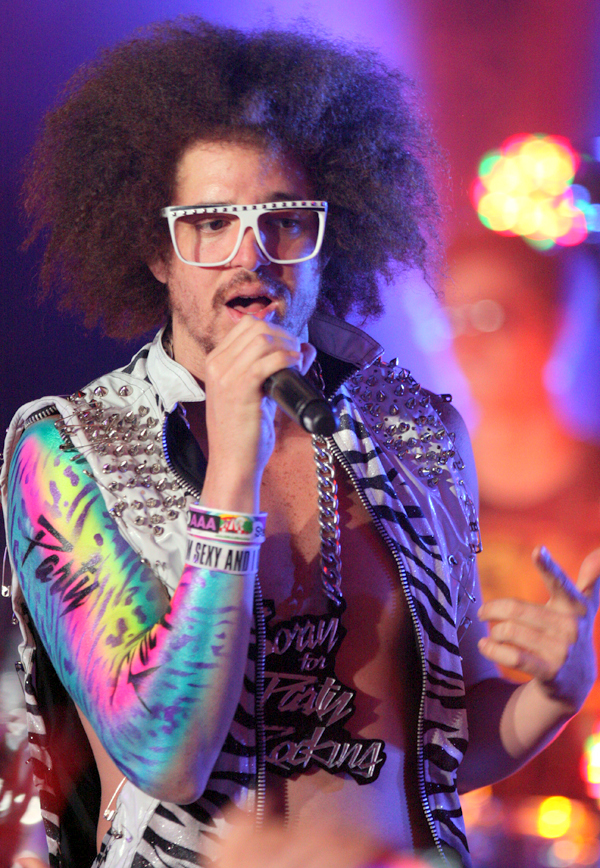
The most useful review of Redfoo’s craft was written by someone who did not think they were watching DJing at all. At Privilege in Ibiza in 2012, Ibiza Spotlight watched him strap an iPad to his hand, run the Beat Rock app, and roll into “Party Rock Anthem” while dancers in official Party Rock uniforms invaded the stage. The writer’s verdict was gentle but devastating: this was not DJing; Redfoo was the host, and the host had brought champagne.
When “Champagne Showers” arrived, bottles appeared as if by treaty violation. apl.de.ap of the Black Eyed Peas joined the spray. When “Every Day I’m Shuffling” dropped, Redfoo and the crew performed the Melbourne shuffle on a dance floor that had previously survived decades of techno without requiring novelty foam. The set still mixed LMFAO with Calvin Harris and David Guetta—open-format EDM for tourists who had discovered Ibiza through a music video—but the skill on display was choreography, not beat-matching.
That iPad set was not a one-off gimmick. Redfoo had been promoting Beat Rock, his mobile DJ app, as early as 2012, with blog footage of an hour-long set driven from a phone, Bluetooth into the mixer, effects included, upload-to-SoundCloud promised. Afrojack reportedly told him, in the colourful idiom of the era, that he had made something impressive. The New York Times profile of LMFAO in 2012 listed Redfoo as a former day trader behind Beat Rock while Sky Blu worked on separate DJ software—a family business in plugins.
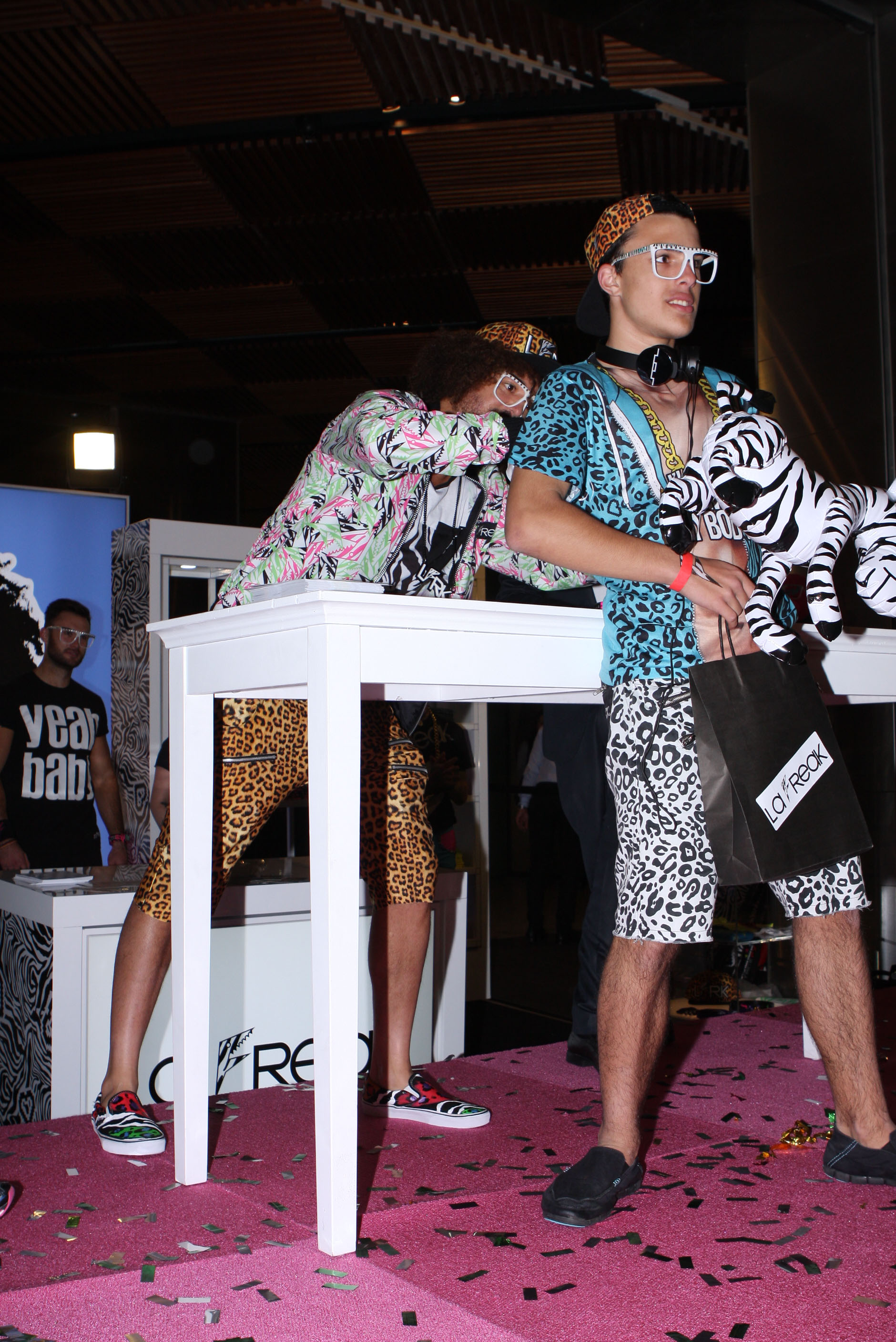
Meanwhile the actual turntable work in the LMFAO ecosystem often belonged to DJ Air, described in Las Vegas press as “the LMFAO DJ.” When Redfoo launched his monthly Party Rock Mondays residency at Marquee in the Cosmopolitan in January 2011, he told the Las Vegas Sun the night was programmed: he controlled the music and took the crowd on a “roller coaster ride,” while DJ Air played a set and other “Party Rock–approved” selectors held the room. Redfoo combed playlists in advance—mandatory songs, forbidden duplicates, go-go timing, wardrobe for cocktail staff—so that the room felt chaotic while behaving, in his words, “very systematic and structured.” That is not underground. It is Broadway with bottle service.
Venues, countries, festivals: the passport stamp collection
Redfoo’s DJ calendar reads like a billionaire’s hen weekend. Las Vegas was headquarters: Marquee residencies, later dates at XS (Encore), cross-property “Shots” warnings included. Sundance 2012 turned Park City into the “House of Party Rock,” with a boutique by day and Redfoo plus the Party Rock Crew by night at the former Harry O’s space—the same weekend Deadmau5 and Big Sean shared the billing, because Utah needed balance.
Europe got the stadium version: Tomorrowland in Boom, Belgium, documented on setlist.fm for 2012 and 2013, with fragments of LMFAO hits and covers of Calvin Harris and Garmiani. Ibiza got the champagne edition. Asia got enthusiasm: the Korea Times interviewed him ahead of the Seoul Jazz Festival in 2016—a booking that is either genius programming or a prank on the word “jazz,” depending on your relationship with irony. Redfoo declared “a party between me and Korea,” praised K-pop wardrobe, and promised surprises with Korean artists. Thailand got the Party Rock Mansion tour stop at Illuzion, Phuket, in 2016, where setlist.fm lists a parade of his own singles (“Shots,” “Party Rock Anthem,” “Sexy and I Know It”) mixed with David Guetta, Firebeatz, and—because why not—Van Halen’s “Jump.”
Australian booking agencies still market him as a DJ who arrives with “glowsticks, inflatable toys, cryo guns, full wardrobe, party favors, go-go dancers, and the whole Party Rock Crew.” The fine print is the show. The decks are part of the prop department.
DJing his own music (and why that is the point)
Purists complain when headliners play only their discography. Redfoo solved the problem by making the discography the entire brand. LMFAO’s arena years already blurred live band, rap show, and DJ set; solo, he leaned harder into self-reference. Phuket setlists read like a greatest-hits playlist with occasional cover bait. That is not laziness; it is vertical integration. He wrote the hooks, produced the tracks, and then “DJed” them while doing the shuffle in safety goggles.
After LMFAO’s 2012 hiatus—announced to the BBC as a break to explore solo projects, not a divorce—Redfoo told interviewers his solo music would stay “LMFAO-ish.” He was right. The Party Rock Mansion album (2016) extended the franchise. The live show extended it further. Fellow DJs in the traditional sense were either collaborators (Guetta, Harris on playlists) or employees (DJ Air, Lucky Lou, PS1 on Redfoo’s mood board). The EDM establishment tolerated him because he sold tickets to people who did not know what a BPM counter was, and those people bought drinks.
What other people say (selected honesty)
Ibiza Spotlight: not DJing, hosting.
Las Vegas hospitality press: structured mayhem.
Afrojack (apocryphal but repeated): impressed by Beat Rock.
SkyBlu, on the hiatus: family always, directions different—the diplomatic statement of a nephew who has seen the foam cannon up close.
Redfoo himself, to the Korea Times: inspiration comes from “party people, sexy ladies, good music and DJs that play good music”—which is either generous to other DJs or a subtle confession that he ranks himself adjacent to the category, not inside it.
He also claimed he did not invent the shuffle, only popularised it by yelling about it in a video. That is the most DJ-adjacent thing he has ever said: the selector as amplifier, not author.
Personal life, gossip, and the plot twist called tennis
No profile survives without the sidebar. Redfoo’s romantic greatest hit was Victoria Azarenka, the Belarusian tennis star, circa 2012–2014. He lurked in player boxes, crashed press conferences, told radio he was “in love” with a “No. 1, if you will,” and refused to kiss-and-tell while photographers did it for him. Tennis blogs debated whether he was a distraction or a mascot; Sports Illustrated noted the WTA had acquired an unofficial hype man in leopard print. They split in 2014, with Redfoo philosophising that careers matter and that love works best when both people are retired—a line Azarenka’s forehand clearly did not endorse.
Earlier gossip linked him to tabloid curiosity while he judged The X Factor Australia and chased solo album titles that read like dares (I Look Good Naked was a working title; Wikipedia vandalism suggested worse). A SPIN interview captured peak Redfoo: stand-up comedy about Britney Spears, LMFAO hiatus blamed on partying too hard, and a Facebook page that linked to Wikipedia because why maintain two myths.
The current era is stranger and softer. Partner Jasmine “Jazzy” Alkouri, plant-based living, a vegan ranch in Calabasas with rescue cows, pigs, turkeys, chickens, and multiple dogs—including a Saint Bernard Jazzy calls the “gateway dog” that forced them out of a West Hollywood condo. Interviews in 2025–2026 mention two daughters, sobriety for roughly a decade, and hopes the girls become tennis players rather than DJs—which tells you who won the household argument about what “Party Rock” means at 7 p.m. on a Tuesday.
And then there is the rumour that refuses to die: Redfoo, professional tennis player. He took a wildcard into qualifying at the US Open, played ITF events, and in 2025–2026 surfaced in explainers about a man with Motown DNA chasing ATP points while the rest of the world asked where LMFAO went. The DJ Follower position is simple: if he can serve at pace, he can certainly press play on his own hook.
Common ground with actual DJs, and the steep cliff
What Redfoo shares with working selectors: reading the room, pacing a night, understanding that the drop is theatre. What he does not share: anonymity, four-hour vinyl journeys, or the quiet pride of a transition only three people notice.
His steepest opposing view is not with techno purists—they stopped engaging years ago—but with the idea that DJing requires disappearing behind the music. Redfoo’s whole career is the opposite thesis: the DJ as frontman, brand ambassador, and inflatable zookeeper. Berry Gordy wanted Motown to make people happy. Stefan built a franchise that makes people hammered, shuffling, and photographed.
LMFAO may reunite someday; they always reserve the right. Until then, Redfoo remains on the circuit: less a disc jockey than a human genre called Party Rock, still listed among DJs because the industry never invented a separate chart for “man who brings his own anthem and a cryo gun.”
If you want the technical masterclass, go to the booth next door. If you want to know what happens when Motown’s youngest son decides the world needs more shots, stay exactly where Redfoo is standing—usually on a monitor, iPad glowing, nephew optional, champagne imminent.
Profile: djrank.net/entity.php?qid=Q2938630 · Rankings: djrankings.org/DJ-REDFOO.