Before David Guetta learned to smile for stadium cameras like a man selling joy on installment plans, before Tiësto became a surname you could put on a fragrance bottle, before every third artist on a festival poster was legally required to contain the letters DJ, there was a Swiss man in Kölliken who looked at the booth, looked at the crowd, and thought: why not both?
Peter René Baumann, DJ BoBo to you, to Germany, to every person who ever heard “Somebody Dance with Me” in a shopping mall and felt their soul briefly levitate, did something deceptively simple in the early 1990s. He kept the job title in the name and walked to the front anyway. Not as a gimmick. As a business model.

The DJ who refused to stay behind the booth
In 1985, when most “DJs” were still anonymous hands on vinyl, Baumann was runner-up at the Swiss DJ Championships. He was spinning at Don Paco and Hazyland, doing the respectable invisible work, until it wasn’t enough. He wanted his name on the record. He got it. “I Love You” dropped in 1989. The club career didn’t die; it just became the origin story.
Then came November 1992 and the moment every DJ who worked in Europe in the early nineties remembers, whether they admit it or not: Somebody Dance with Me. Eurodance with a stolen Rockwell melody, a female hook, and BoBo rapping like he had personally invented enthusiasm. Number one in Switzerland and Sweden. Top five across the continent. Gold in Germany. Suddenly the question wasn’t “can a DJ be a star?” It was “why would anyone go back to hiding?”
Every veteran of that era has a BoBo memory. The acrobatic dance contests. The sheer velocity of releases, Keep on Dancing, Take Control, Everybody (Platinum, naturally), Let the Dream Come True, Love Is All Around. He wasn’t a crossover accident. He was a crossover blueprint: producer, rapper, performer, brand, before “personal brand” made you want to delete the internet.
Guetta would later perfect the guest-vocal stadium alchemy. Tiësto would turn DJ into a global passport. Calvin Harris would monetize the concept until it became wallpaper. But the trail was blazed by a Swiss-Italian kid who almost became a baker.
Yes, baker. Confectionery and pastry was the original plan. Life is comedy: he nearly fed people croissants; instead he fed them hooks for thirty-five years.
Unusual résumé items (selected)
BoBo’s career is a masterclass in things that should not work but absolutely did:
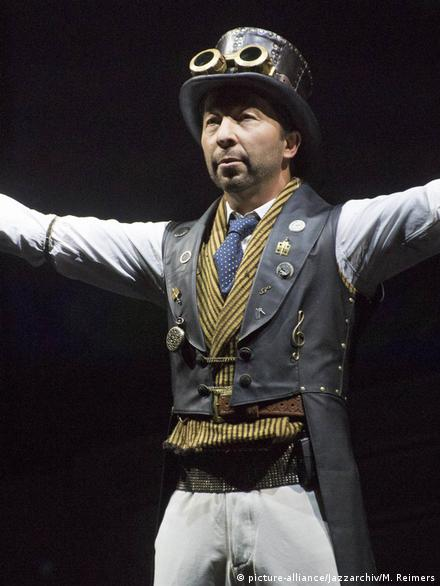
- Breakdancing, Top 10 in Germany’s “Disco Kings” contest. The man can move. This matters when your stage show later involves steampunk goggles and arms spread like you are blessing an airport.
- Ten World Music Awards for Switzerland’s best-selling artist. Ten. Switzerland does not hand out participation trophies; they hand out watches and fiscal discretion.
- Chihuahua, written in ten days for a Coca-Cola campaign in Spain, then re-released and conquering Europe like a tiny yapping empire. Diamond in France. You cannot make this up. Corporate soda asked for a banger; Eurodance obliged.
- Eurovision 2007, He applied, complained publicly that Swiss license-fee money shouldn’t fund foreign acts, got selected out of 200 applicants, entered Vampires Are Alive, finished 20th in the semi-final, and still released the album anyway. Peak commitment to the bit.
- UEFA Euro 2008 anthem, Fans voted between “Olé Olé” and “Let the Games Begin.” Democracy chose party. Correct.
- UN World Food Programme ambassador, First Swiss celebrity in the role. Even the absurdity has a charitable appendix.
- Voice actor, Because why stop at one medium when you can occupy all of them like a polite Swiss invasion.
The decades in fast-forward ( edition)
1993–1996: Albums land. Charts obey. He represents Switzerland at World Music Awards so often they should have given him a parking space in Monaco. Tours Asia and Australia. Performs for 400,000 people across Europe in a year, numbers today’s influencers fake with filters.
1996–1999: World in Motion sits on the Swiss chart for 67 weeks. Sixty-seven. Albums go double-platinum at home while Germany keeps mailing him gold. He starts singing on records, which in lesser hands would be a warning sign; in his hands it’s Tuesday.
2001–2005: Covers Irene Cara’s What a Feeling because why not inherit the eighties properly. Wins Echo recognition with co-producer Axel Breitung. Pirates of Dance goes to Disneyland Paris. Of course it does.
2007–2011: Vampires, football anthems, Fantasy, Dancing Las Vegas with a DVD because the album alone would be insufficient content for a man who cannot stop delivering.
2014–2018: Circus, Mystorial, KaleidoLuna, still top ten in Switzerland while younger acts discover “nostalgia cycles” on TikTok. He never left. They keep returning to him like a Eurodance pension plan.
The last ten years: still here, still BoBo
Here is what the casual listener misses if they think BoBo is a museum piece behind glass labeled “1994”:
2020: Remixes & Unreleased Tracks, because the vault still had fuel.
2022: Evolut30n, top ten in Switzerland. The title alone is a dad joke with a studio budget. He was 54. Your favorite DJ at 24 is “taking a wellness year.”
2024: Celebrating Under the Stars, tied to Europa-Park’s anniversary. Yes, the theme park. BoBo has become part of European infrastructure the way highways and decent bread are.
January 2026: The Great Adventure, new studio album, fourteen tracks, world premiere of the同名 tour at Europa-Park. Sixteen albums in. Still pressing CDs and LPs like a man who trusts physical media and leg day equally.
Is he still active as a DJ? In the only sense that matters: he never stopped being one. He DJs, he produces, he tours, he releases, he shows up in costumes that suggest a Victorian inventor who discovered serotonin. The booth is not his prison; it’s his first office. The stage is headquarters.
Why every early-90s DJ remembers him
Because he solved the identity problem before the industry knew it was a problem. Dance music had producers. It had vocalists. It had anonymous remixers whose names appeared in six-point type. BoBo put DJ on the marquee and then stood in front of the marquee rapping, dancing, and smiling like the future was a paid subscription he had already renewed.
When you hear a DJ-producer-artist today, you are hearing an echo. Sometimes a dignified echo. Sometimes a cash register. But the first loud, shameless, European echo, for millions, was a Swiss guy who almost sold you pastries.
David Guetta built an empire on collabs and crossover pop domination. Tiësto built one on trance and then on everything. BoBo built his by refusing the split personality: one name, one face, one hook at a time, for decades, with the work ethic of a baker who decided the oven was too small.
The verdict (witty, because earnest is boring)
DJ BoBo is not cool in the way Berlin warehouse cool is cool. He is not ironic. He is not “for the culture” in the way people say that while selling NFTs. He is the culture, or at least a large, fluorescent, impeccably scheduled slice of European dance culture that predates your streaming algorithm and will probably outlive it.
He put DJ in the name. He walked to the front. He stayed there through Eurovision humiliation, Coca-Cola dogs, vampire singles, football chants, charity ambassadorships, and steampunk cosplay that would end lesser careers. He is 58 and dropped an album in 2026 like it was a calendar reminder.
If you worked in the early nineties, you remember him. If you work now, you are, in some sense, working in his house, whether you know it or not, whether you would admit it at Berghain or not.
There is also the small matter of longevity in a genre that eats its children. Eurodance had a funeral every five years, declared dead by critics, revived by a hook in a car commercial, buried again by irony. BoBo never attended the funerals. He was busy scheduling the next show. While scenes fractured into subgenres with increasingly unpronounceable names, he kept making albums people actually bought in physical stores, which is either quaint or prophetic depending on how cynical you are before coffee.
And the collaborations, Sandra, Irene Cara, Melanie Thornton, Emilia, read like a European pop genealogy project. He did not chase credibility; he chased songs. That is why the early-90s DJ remembers him with something sharper than nostalgia: respect. He proved the booth could be a launchpad, not a hiding place. Every festival headliner with “DJ” on the ticket is standing on a dancefloor he helped build, whether they know the name or just the formula.
Somebody dance with him. He’s been keeping on dancing since before most of us had a legal ID. The trail is his. We’re just still catching up, one prefix at a time.