
There are celebrity DJs, and then there is Asia Argento.
The distinction matters. A celebrity who occasionally stands behind a pair of CDJs is one thing. Asia Argento has been DJing for years, with documented appearances going back at least to 2007, including sets at the Rex Club in Paris and showcases associated with Louis Vuitton, the Guggenheim Museum and Mercedes-Benz. She has also released music herself, collaborated with Brian Molko, Tricky, Munk, Casino Royale and others, and released the albums Total Entropy and Music From My Bed.
But Argento’s DJ career is particularly amusing because almost everything about her life suggests that she should be incapable of playing a normal set.
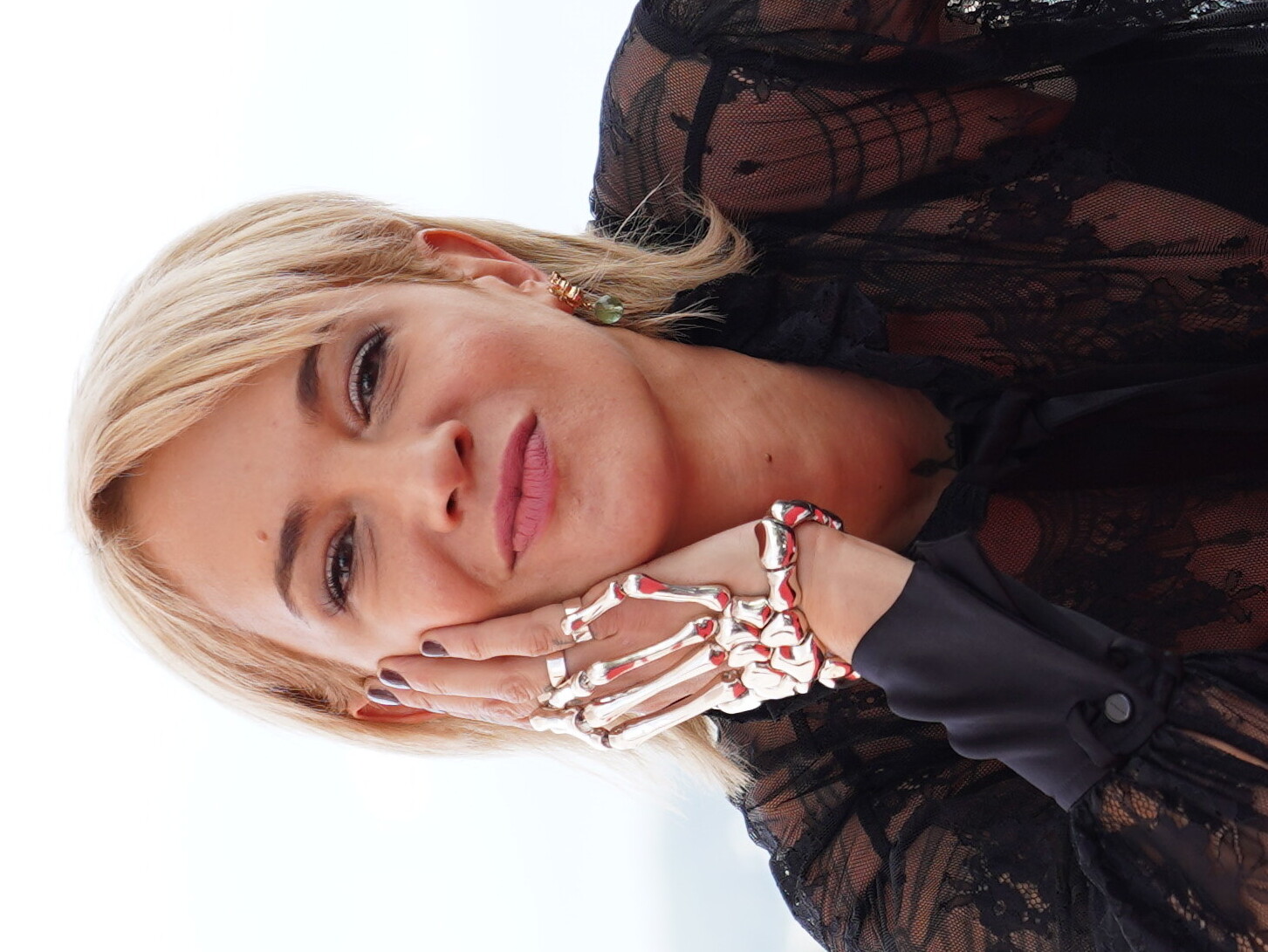
This is a woman whose professional CV includes actress, director, writer, singer, model, author, provocateur, MeToo lightning rod, recovering alcoholic and daughter of the man who taught the world that a perfectly respectable staircase could become a murder weapon.
Naturally, she became a DJ.
And not the sort of DJ who politely plays what the promoter asked for.
Argento once recalled being booked by house clubs that did not actually like the music she played. In Turin, she said, she was threatened with not being paid unless she played house. Her response was apparently to retaliate with extremely hard techno. This is perhaps the most Asia Argento DJ story imaginable: receive an artistic request, interpret it as a personal challenge, and respond by turning the BPM dial into a weapon.
Her sets have reportedly moved from Throbbing Gristle to Einstürzende Neubauten, while on another occasion she played Tiga’s remix of “Sunglasses at Night” three times. That is not really a DJ set so much as an interrogation technique.
The interesting thing is that this musical chaos is not an invention of the booth. It is the continuation of Argento’s entire artistic career.
Horror in the blood, funk in the bag
Her father, Dario Argento, built an empire out of atmosphere, suspense, lurid color, violence and the unsettling suggestion that something terrible is about to happen just outside the frame. Asia grew up inside that machinery. She appeared in her father’s films and later became a filmmaker herself. In a 2026 interview, she described her relationship with her father’s legacy as a push and pull: she wanted to establish herself as Asia rather than simply “the daughter.”
That is precisely what happens when she DJs.
The surname gets her into the room. The records determine whether she gets to stay there.
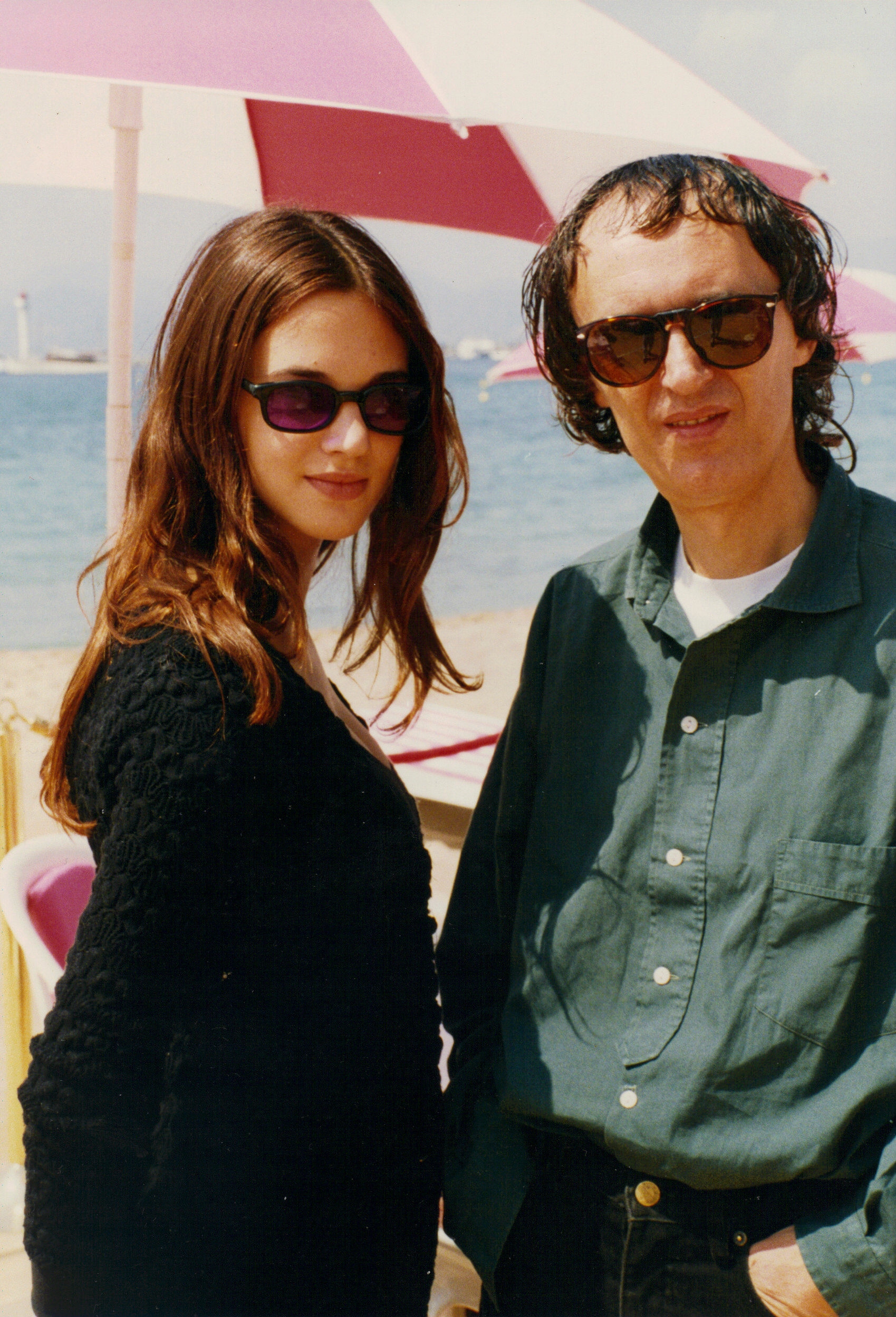
And here is the slightly delicious irony: although Dario’s cinematic legacy dominates the family mythology, Asia has said that her father did not actually own the record collection that shaped her musical education. That belonged largely to her mother, actress Daria Nicolodi. Nicolodi was the music obsessive, and her vinyl collection included funk, soul, psychedelic music and Lou Reed’s Metal Machine Music. Asia still treasures those records and has said she deliberately plays some of them when she wants to disturb people.
So the Argento family inheritance is effectively split between image and sound.
Dario gave her the horror movie.
Daria gave her the record collection.
Asia apparently decided that the sensible thing was to put both behind the DJ booth.
Vinyl, children, and Lou Reed as party entertainment
She has been collecting vinyl since childhood and once told The Quietus that she had three turntables at home and no CD player. She also described DJing for her children and their friends, sometimes entertaining a dozen children with records at the weekend. Her description of this was admirably sinister: she regarded it as a good way of manipulating young, impressionable minds.
This is, incidentally, probably the only children’s party in which the entertainment department could plausibly segue from a nursery rhyme into Lou Reed’s Metal Machine Music.
Argento’s relationship with vinyl is not merely aesthetic nostalgia. She has explicitly connected her attachment to records with her attachment to film. She defended both as organic, physical media at a time when everyone was predicting their imminent death. Film, she argued, has grain, physicality and imperfections; vinyl, likewise, remains something tangible rather than an endlessly duplicated digital representation.
Which makes her a particularly appropriate DJ for an era in which vinyl has returned from the dead.
Although, considering her family background, perhaps “returned from the dead” is less a metaphor than a business model.
Records, Roman dialect, and refusal of the clean brand
Her route into music was not simply DJing. She recorded with Brian Molko of Placebo on “Je t’aime... moi non plus” in 2008, worked with The Legendary Tigerman, contributed to projects involving Tricky and Munk, and released Total Entropy in 2013. In 2021 she followed it with Music From My Bed, a deliberately intimate project produced by Holly that mixed electronic music, rap, Roman dialect and collaborations including DJ Gruff and her daughter Anna Lou.
And even the title Music From My Bed sounds like an Asia Argento production meeting a nightclub flyer.
The record’s Roman identity was deliberate. Argento has spoken about her love for Roman folk songs and specifically cited Franco Califano and Gabriella Ferri. She also said “Te Possino” was something she regularly sang at parties until her friends had effectively memorized it against their will.
Her musical taste therefore refuses the convenient celebrity-DJ stereotype. There is no obvious attempt to construct a clean brand around one genre. Instead there is a collision of electronic music, punk, industrial, soul, funk, psychedelic music, hip-hop, rap, Italian popular music and experimental sounds.
That eclecticism goes back to childhood.
In a 2026 interview, Argento recalled growing up in Sakhalin, Russia, where she became obsessed with snowboarding. She would make playlists according to what she was doing on the mountain: chilled music for cruising, more intense music for the snow park. Her soundtrack included hip-hop, rap, punk and electronic music. She also spent time painting with her grandfather while he listened to classical symphonies.
It is difficult to imagine a more useful education for a DJ.
First learn that music changes according to physical movement.
Then learn that music changes the atmosphere of a room.
Then spend the rest of your life making the room slightly nervous.
Berlin, booking, and control
Argento says she bought her first record at 20, then bought two turntables and taught herself to mix. While living in Bariloche, Argentina, she encountered the Groovies collective from Neuquén, who organized multi-day raves in the countryside. She was invited to play and encountered the vinyl DJ Violett, whom she describes as the first woman she saw playing vinyl live. Carla Tintoré was another influence.
The chronology is important. The DJ did not emerge because the actress needed another celebrity accessory. According to Argento’s own account, the music came first and the booking career followed. She later moved to Berlin and became involved in booking and artist management, eventually developing the Esmero agency alongside her DJ work.
There is another reason her DJ career makes sense: Argento has always had an unusual relationship with control.
As an actress, she is constantly being watched.
As a filmmaker, she controls the camera.
As a celebrity, she is subjected to gossip.
As a DJ, she controls what everyone hears.
That last role may actually be the most straightforward.

Public life as an accidental set list
Her public life has supplied enough material for several genres of music journalism. There was her relationship with musician Morgan and the difficult aftermath involving their daughter Anna Lou. There was her relationship with Anthony Bourdain, which began after they met while he was filming Parts Unknown in Rome and which became intensely scrutinized following his death in 2018.
There was, of course, Harvey Weinstein and the revelation that helped make Argento one of the internationally recognizable faces of the #MeToo movement. That period radically changed her public life and career, followed by intense media scrutiny and her own admission that she had made serious mistakes in how she handled parts of her life and public statements.
And then there is the latest chapter. In June 2026, Argento told Corriere della Sera that she considers herself an alcoholic in recovery, described her work with the Twelve Steps, said she had apologized to many people from her past and explained why she had deleted Instagram. Her reasoning was unusually appropriate for someone whose life has been lived under an almost permanent media strobe light: she said that she could no longer express opinions without creating a storm and that disappearing from social media was helping her age with more dignity.
There have also been renewed media reports in 2026 concerning allegations involving actor Jimmy Bennett and Argento’s vehement denial of a sexual relationship with him. Argento has described the reporting as false and said their relationship was one of friendship, while acknowledging that a financial dispute involving Bennett had been handled privately during her relationship with Bourdain. Because the allegations are disputed, they belong in the history of the media storm around Argento rather than being presented as established fact.
The DJ interpretation of all this is almost too easy.
Imagine the set list.
Start with something seductive.
Let the room settle.
Introduce something uncomfortable.
Wait for people to wonder where it is going.
Then make the transition harder.
If anyone complains, turn the volume up.
That is essentially the Argento career model.
Abel Ferrara, Goblin, and the nightclub as horror set
Even her strangest film anecdotes fit the formula. She has described working with Abel Ferrara as a major influence on the way she approaches cinema, while also joking that his extreme films damaged her career. She singled out Go Go Tales, including the infamous scene in which she kissed a dog, as particularly disastrous for her professional image.
A conventional DJ would probably call that a career setback.
Asia Argento would probably call it a bridge record.
Her family legacy makes the comparison even richer. Dario Argento’s cinema is famous for refusing subtlety when subtlety becomes boring. His films use music, color and rhythm as active weapons. The Goblin connection is particularly important here, although Asia has clarified that it was her mother who introduced her father to Goblin rather than Dario being the source of her own musical education.
In other words, Asia inherited the Argento instinct for atmosphere without necessarily inheriting a narrow musical vocabulary.
She is not trying to soundtrack a horror movie.
She is trying to make the nightclub feel like one.
And that is where the DJ persona becomes more convincing than the celebrity-DJ label suggests.
In 2019 she was photographed DJing during Milan Fashion Week, while her broader DJ résumé includes cultural institutions and fashion brands as well as clubs. She has also performed charity sets, including a 2020 DICE TV set benefiting the Sant’Egidio community organization in Rome.
The record bag as autobiography
But the most revealing evidence remains the music itself.
Throbbing Gristle.
Einstürzende Neubauten.
Lou Reed.
Tiga.
Franco Califano.
Gabriella Ferri.
Hip-hop.
Punk.
Electronic music.
Experimental records inherited from her mother.
And whatever happens to be lurking in the record bag when the lights go down.
That is not the musical taste of somebody trying to make everyone happy.
It is the taste of someone who has spent a lifetime being told that the audience has expectations and has repeatedly discovered that expectations are mostly there to be violated.
Which brings us back to Dario Argento.
The father’s great trick was to make the audience anticipate the next shock.
Asia’s great DJ trick may be similar.
You think you know what is coming.
You hear the opening bars.
You think you have her figured out.
Then the record changes.
And suddenly you are somewhere else.
Perhaps that is the most Argento thing about her DJ career.
She does not merely mix records.
She edits the scene.
And if the crowd does not like the cut, well, there is always harder techno.
Profile reference: djrank.net/asia-argento (Q232052).